Bad Video Gets a Pass. Bad Audio Gets You Clicked Off.

Photo: InnaSto, CC BY 4.0, via Wikimedia Commons
There's a ritual every woodworker knows: you finish a build, film the whole thing, edit until 2 a.m., upload — and then watch the retention graph fall off a cliff in the first fifteen seconds. You blame the thumbnail. You blame the algorithm. You blame the fact that you used pine instead of walnut.
Chances are, it was none of those. It was your audio.
The Eight-Second Rule
Sound engineer Marcus Delgado, who mixes audio for several mid-size build channels out of his home studio in Portland, puts it bluntly: "Viewers will watch a phone-shot video if it's clean. They will not watch a RED camera video if it sounds like it was recorded inside a metal trash can."
The data backs him up. Audio problems — hiss, echo, wind noise, that low rumble from a shop vac running somewhere in the background — are processed as a quality signal. If it sounds bad, viewers subconsciously assume everything is bad, and they bail. Video flaws, by contrast, are easy to forgive. A little softness, a slightly off white balance? Nobody cares. The human eye is remarkably tolerant; the human ear is not.
What a Shop Actually Sounds Like
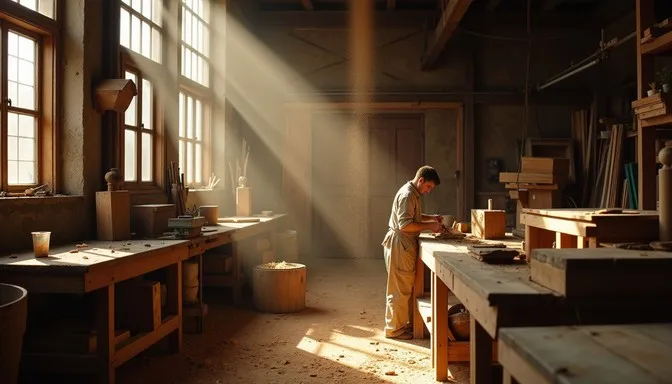
Here's the fun part: a workshop is an audio goldmine. The hiss of a hand plane shaving curling off the blade. The whine of a tablesaw spinning up. The hollow thock of a mallet on a chisel. The silence after a sander cuts off, ringing in your ears.
The best build videos treat these sounds like instruments. Go back and watch any no-talking build channel with your eyes closed. You'll notice the creator isn't just capturing sound — they're placing it. A close-mic'd plane cut, recorded two feet from the blade, lands in the mix like a drum hit. A long, quiet stretch of hand-sanding becomes the audio equivalent of a wide shot.
Delgado calls this "mixing with your shop." You're not just documenting the build. You're scoring it.
The $100 Fix Nobody Does
Ask a hundred new creators what they're saving up for and most will say a better camera. Almost nobody says a better microphone — which is backwards, because the audio fix is cheaper and does more for your watch time.
A few things the pros we spoke to recommended:
- Kill the echo before you spend a dime. Hanging moving blankets, tossing a rug on concrete, even leaving your cabinet doors open absorbs reflections. Free, and it changes everything.
- Get the mic close. A $60 lavalier clipped to your shirt beats a $500 shotgun mic mounted ten feet away. Distance is the enemy, not gear.
- Record room tone. Thirty seconds of your shop's silence, captured before you start. Editors use it to patch gaps so the audio never "drops out" mid-video.
- Sync your sound effects manually. The plane cut you recorded separately and lined up in post will always sound better than the one your camera caught from across the garage.
Total damage: often under $150. Less than the lens everybody's coveting.
Silence Is a Feature, Not a Gap
There's a specific kind of creator anxiety that treats silence as dead air — something to be filled with music, ASAP. But in build videos, silence does work. It creates rhythm. It gives the viewer's ear a place to rest. The channels with the longest watch times tend to use music sparingly and let the shop breathe.
Think of it like seasoning. A little score under a time-lapse? Great. Wall-to-wall acoustic guitar over every second of footage? Your audience's brain never gets a moment to lock into the actual sounds of the craft — the very thing that makes your video different from a hundred others.
Your Ears Are a Gear Priority
If you take one thing away, make it this: audit your audio before you upgrade anything else. Watch your last video with your eyes closed. Listen for hiss, hum, echo, clipping. If you wince even once, that's where your next $100 goes.
Your camera gets the compliments. Your mic keeps the viewers. In the attention economy of 2025, that trade is the best deal in the shop.