Your Thumbnail Is Doing All the Work: Inside the Click Economy of DIY YouTube

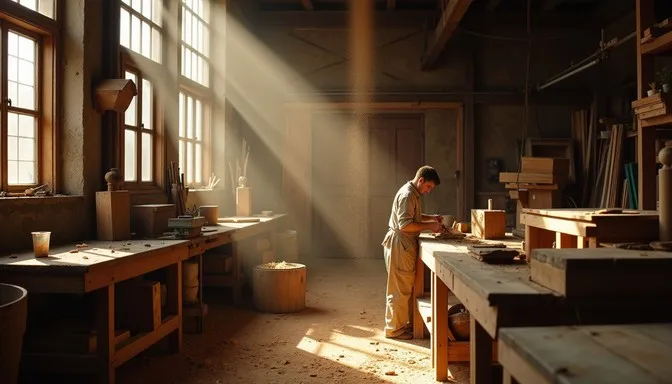
Photo: https://www.youtube.com/@_TV10, CC BY 3.0, via Wikimedia Commons
Scroll through your YouTube homepage long enough and you'll spot the pattern. A hand holding a chisel. A red arrow pointing at a blurry blob of epoxy. A title in ALL CAPS promising the 'CHEAPEST' or the 'IMPOSSIBLE' or the 'EASIEST' anything. Woodworking YouTube has a packaging language all its own, and whether you realize it or not, you've been fluent in it for years.
But here's the question nobody in the maker community wants to ask out loud: does all that clickbait machinery actually build an audience? Or is the whole thing a sugar rush — a spike of curiosity that evaporates the second the video ends?
The Anatomy of a Click
Talk to enough creators and a few thumbnail truths keep surfacing. Faces outperform hands, most of the time. High contrast beats natural light. And whatever the project actually is, it needs to be readable at the size of a postage stamp on a phone screen — because that's where roughly 70% of US YouTube viewing happens.
The classic maker thumbnail formula goes something like this: the finished piece on the left, the raw material or 'before' state on the right, and a human expression somewhere in the middle that says either 'I can't believe this worked' or 'this went horribly wrong.' Bonus points for a circle or arrow, which creators admit are embarrassing and effective in equal measure.
Titles follow their own grammar. There's the transformation arc ('Turning a $5 Pallet Into a $500 Table'), the confession ('I Was Wrong About This Joint'), and the stakes play ('My Biggest Project Ever Almost Broke Me'). Notice what's missing from all three? The word 'woodworking.' The best-performing titles sell a story, not a craft.
When Packaging Works — and When It Backfires
Here's where things get interesting. The channels that blow up on viral packaging often struggle to keep those viewers around. Algorithm watchers call them 'drive-by views' — people who click once out of curiosity, never subscribe, and never come back. The retention graphs tell the story: a massive spike from browse and suggested traffic, then a cliff.
Meanwhile, some of the most beloved build channels on the platform have thumbnails that look almost deliberately plain. No arrows. No shocked faces. Just a beautiful piece of furniture and a quiet confidence that says, 'you already know who we are.' That confidence is earned. Once a channel has a loyal base, packaging matters less because the notification bell does the selling.
The sweet spot, according to creators who've studied their own analytics, is packaging that makes an honest promise the video actually keeps. A thumbnail that overpromises gets punished by retention metrics — viewers bail in the first ninety seconds when the content doesn't match the hype, and the algorithm takes note. In other words, the clickbait tax is real, and YouTube collects it automatically.
The Subscriber Question
So does a viral hit convert into community? Sometimes, but rarely on its own. What tends to convert is the thing that happens after the click: a strong opening thirty seconds, a personality worth spending twenty minutes with, and a project that delivers on whatever the title promised. Creators who treat packaging as the whole strategy end up chasing the algorithm forever. Creators who treat it as the front door to a house worth visiting build channels that last.
There's also a subtle credibility cost. Woodworking has a passionate core audience in the US — the folks buying lumber at the local hardwood dealer, not just the big-box store — and they can smell a manufactured drama thumbnail from a mile away. Push the hype too hard and you risk becoming 'that channel' the serious makers quietly stop recommending in forums and Facebook groups.
What Viewers Actually Want
Strip away the analytics and the takeaway is refreshingly simple: people click for curiosity, but they subscribe for trust. The thumbnail's only job is to get a fair shake for the video. Everything after that is on the creator.
So the next time a red arrow drags you into a video about a epoxy river table you'd never actually build, don't feel played. Feel informed. You just watched the click economy do its job. Whether you stay for the whole video — well, that part's still up to the person holding the chisel.