The First 365 Days: We Followed Five Hobby Channels From Zero (Here's What the Numbers Actually Looked Like)
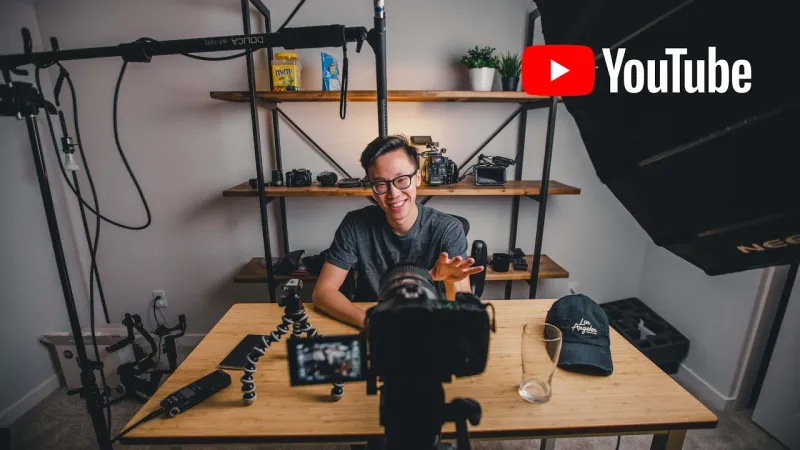
Photo: home workshop video camera filming setup beginner youtuber, via i.ytimg.com
Creator advice on the internet has a selection bias problem. The people giving it are, by definition, the ones who made it. Their first year gets compressed into a montage: a scrappy setup, a viral moment, a silver play button on the wall. What gets edited out is everything else — the 14-view videos, the abandoned series, the three-week stretches where life happens and the channel just... sits there.
So we did it the unglamorous way. We followed five hobbyist channels — all woodworking and maker-focused, all started by regular folks with day jobs — from their very first upload through month twelve. No sponsorships, no existing audience, no shortcuts. Here's what a real first year looks like.
The Baseline: Five Channels, Five Very Different Trajectories
To protect the creators' privacy, we'll use first names and rough numbers, but every figure below is real.
- Dana, 34, Arizona. Furniture builds. Started with a phone camera and a $40 lavalier mic. Ended year one at about 2,100 subscribers.
- Marcus, 41, Ohio. Tool reviews and shop projects. The most consistent uploader of the group. Finished around 4,800 subs.
- Priya, 29, Georgia. Small-space apartment woodworking — a niche she picked deliberately. About 9,000 subs by month twelve.
- Tom, 56, Wisconsin. Traditional hand-tool work. Slowest growth of the five at roughly 700 subs — with a twist we'll get to.
- Jess, 38, Oregon. General DIY and home projects. Started strong, burned out hard, came back. Landed near 1,500 subs.
Add it up and the average is around 3,600 subscribers after a year of serious work. If that sounds low compared to the success stories you see online — good. That's the point.
Month-by-Month: The Shape of a Real Year
Every channel followed the same rough arc, and it's worth seeing laid out.
Months 1–3: The void. Views ranged from 8 to 60 per video. Dana told us she made eleven videos before a single stranger commented. The biggest practical challenge here wasn't the algorithm — it was morale. Two of the five nearly quit in this window, and neither cited technical problems. They cited silence.
Months 4–6: The grind. Uploaders settled into schedules — one video a week for Marcus and Priya, biweekly for everyone else. This is where burnout showed up first. Jess front-loaded five videos before launching, published them in five weeks, then went dark for six. "I treated it like a sprint," she said, "and sprints end."
Months 7–9: The plateau that nobody warns you about. Four of five channels saw growth flatline here, even with consistent uploads. This is the stretch that highlight-reel advice never mentions. Marcus called it "the month seven wall" — you're better at making videos, your numbers don't reflect it, and your day job hasn't gone anywhere.
Months 10–12: The breakout — or the patience test. Three of the five had a genuine breakout video by year's end. Here's the part worth underlining: none of the breakout videos were the content the creator expected to perform.
The Videos That Broke Through
Priya's channel jumped from 900 to over 6,000 subscribers in six weeks off a single video: a no-nonsense breakdown of building a workbench on a $150 budget in a one-car-garage-adjacent apartment. She'd spent months on polished build videos that averaged 200 views. The breakout was shot in one afternoon, mostly handheld, with her talking straight to camera about what actually fits in a small space.
Tom's story is the outlier that proves the rule. His channel crawled along at a few dozen views per video for ten months. Then a 4-minute clip of him sharpening a chisel — no talking, just the stone and the sound — got picked up by a Reddit community and did 300,000 views in a week. His subscriber count tripled in eleven days. He has not been able to replicate it since, and he's fine with that: "That one video pays for my attention now. People stay."
The pattern across all three breakouts: they solved a specific, searchable problem or delivered a distinct feeling — not a generic build. "How I did X in a small space for cheap" beat "I built a nice thing" every single time.
What We'd Tell Anyone Starting a Channel
If we could compress the year into five honest bullets, it'd be these:
- Pick a schedule you can survive your worst month, not your best one. Biweekly beat weekly every time it came to sustainability.
- Expect month seven to be the hardest. Not the beginning — the middle. Plan for it.
- Your breakout video probably already exists in your head, and it's the one you think is too obvious. The obvious question to you is a real problem to thousands of people.
- Ten subscribers who comment are worth more than a thousand who don't. Every breakout in our group was preceded by a small, engaged core.
- A first year without going viral is not a failed first year. Tom's channel was "failing" for ten months. It was actually a library waiting to be discovered.
The Honest Bottom Line
Four of our five creators are continuing into year two. One is taking a break, and that's a legitimate outcome too — the channel will be there when the shop calls again.
The first year of a hobby channel isn't a growth story. It's a skill acquisition story with occasional evidence of progress. If you go in expecting a montage, month seven will eat you alive. Go in expecting the plateau, and you might just be the one still standing when the breakout video finds you.