Renting a Box to Make Dust: Inside America's Storage Unit Workshops

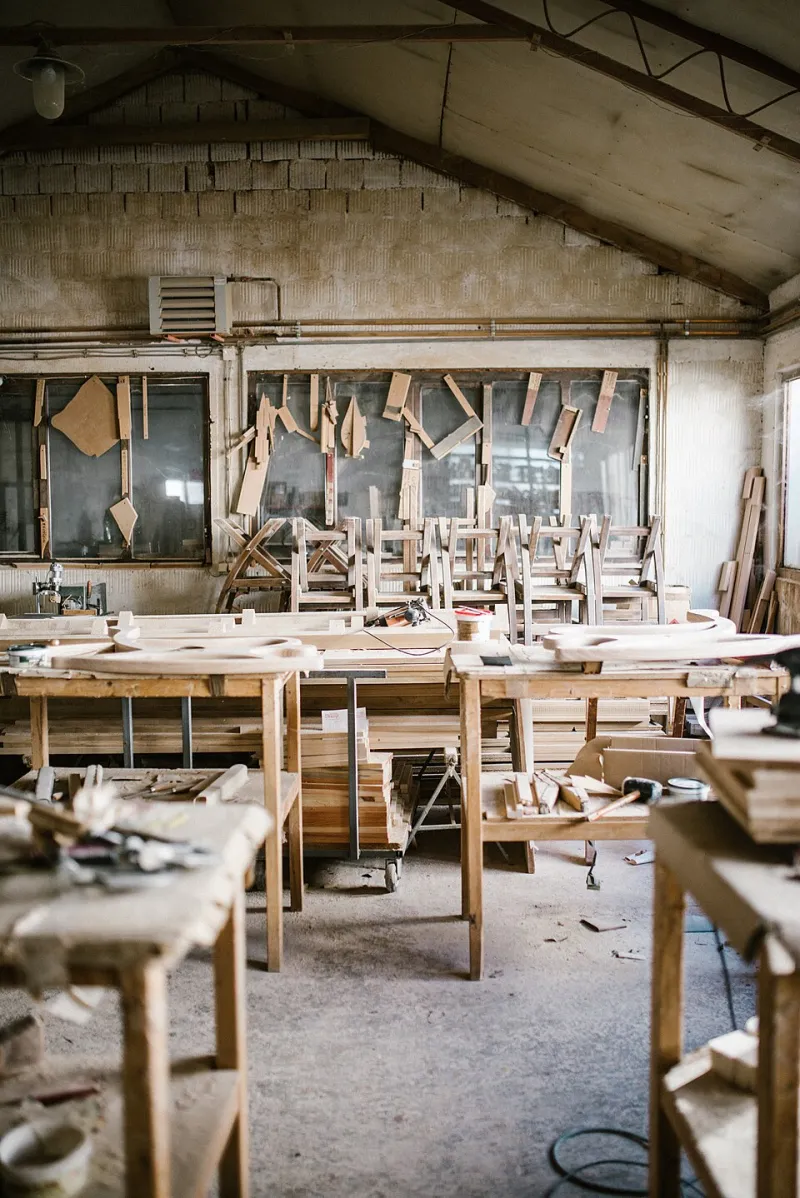
Photo: woodworker working inside rented storage unit workshop with tools, via www.storage.com
Ask anyone to picture a woodworking channel and you'll get the same mental image: a two-car garage, a pegboard wall, maybe a Christmas-light string for ambiance. It's the fantasy that built half the maker internet. It's also, increasingly, fiction.
A quiet migration is happening. Makers across the country are signing leases on climate-controlled storage units, renting industrial bays by the month, and splitting costs in shared maker spaces — all because the garage that was supposed to be free workspace turns out to be the most expensive room in the house. Not in rent. In everything else.
The Garage Tax Nobody Talks About
Running a production shop out of your home means your family breathes the sawdust, your neighbors hear the planer at 9 p.m., and your HVAC system fights a losing war against fine dust. Add filming requirements — lighting, camera angles, acoustic treatment — and a residential garage starts to feel less like a workshop and more like a hostage situation.
"I wasn't getting evicted, but I was close," laughs Marcus Delgado, a furniture builder in Columbus, Ohio, whose channel sits around 180,000 subscribers. "My wife found dust on the kitchen plates. On the plates. That was the meeting where we decided I needed to leave."
Marcus now rents a 10x20 climate-controlled unit about fifteen minutes from his house. Total damage: $310 a month. His neighbor in the same facility runs a vintage camera restoration channel out of the unit next door. Neither of them tells the facility exactly what they do in there — more on that in a second.
Three Budgets, Three Setups
We talked to three creators at wildly different spend levels, and the numbers tell an interesting story.
The $310 Storage Unit — Marcus, Columbus. Basic unit, power via a permit-required electrical drop he negotiated with the facility, a rolling workbench, and a shop vac rigged to a cyclone. No table saw — he uses a track saw to keep noise and amp draw down. The upside: he films until 1 a.m. without a single noise complaint. The downside: no running water, no bathroom, and a rule against "occupancy" that he politely ignores for four hours at a time.
The $850 Rented Garage Bay — Priya, outside Denver. Priya's channel (roughly 60K subs, mostly epoxy and resin work) leases a detached garage bay on a rural property. She gets a half bath, a 220-volt outlet, and — critically — a landlord who thinks the content is "neat." It's twice Marcus's cost, but she runs a full dust collection system and doesn't have to worry about a facility manager walking by. Her one warning: "Read the lease. Mine says 'art studio.' I made sure it said that before I moved in a single tool."
The $200 Shared Maker Space Membership — Dale, Portland. Dale's channel is small — 12K subscribers — and he's the proof that leaving home doesn't require leaving your budget behind. He pays $200 a month for shared access to a community maker space with real dust collection, real ventilation, and a spray booth he could never afford solo. The tradeoff is scheduling. "You can't just wander in at midnight and film a glue-up," he says. "You book time like it's a gym. And you're always on camera — literally, the space has security cams, so no-talking footage of other people's projects is off the table."
The Fine Print Problem
Here's the part nobody puts in a video: most storage facilities technically prohibit this. Their contracts are written for boxes and patio furniture, not jointers and compressor noise. Fire codes, insurance liability, and neighbors-with-keys all complicate things. Some facilities have started offering "workshop units" with power as an official upsell — a smart niche that more operators would be wise to formalize, because the demand is clearly already there, operating in a gray zone.
The makers we spoke with aren't reckless, but they are all operating on handshakes, verbal permissions, or carefully worded leases. It's the least-glamorous part of the creator economy: nobody makes a thumbnail about lease negotiation.
So Is the Garage Fantasy Dead?
Not exactly. But it's worth being honest about what the fantasy is for. The garage shop on camera works because it reads as accessible — viewers see it and think I could do that. Whether the video was actually shot in a garage is almost irrelevant to the viewer. What matters is that the creator can sustain production without burning out their household or their hearing.
Marcus put it best: "The garage was free. But free was costing me my marriage and my lung capacity. Three hundred bucks a month to keep both? That's the cheapest gear I ever bought."
The lesson for anyone scaling a build channel: your space is a production decision, not a lifestyle statement. Budget for it like a tool. Because at some point, the dust doesn't care where it lands — but your family does.
Are you building out a non-traditional shop? The comment section is open — we're collecting setups, budgets, and lease horror stories for a follow-up.