Who's Really Calling the Shots in the Shop? When Watch Data Starts Designing the Projects
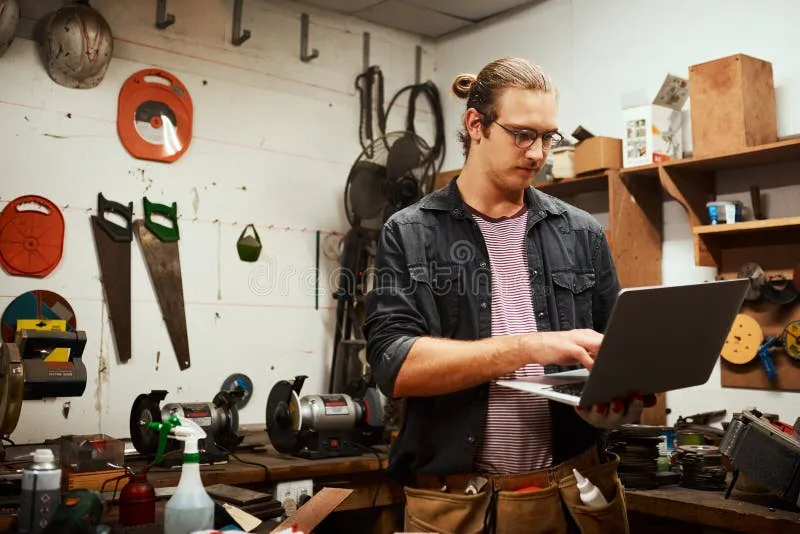
Photo: woodworker checking analytics on laptop in workshop, via thumbs.dreamstime.com
Picture a woodworker in a two-car garage in Ohio. It's a Tuesday night. They've got a stack of walnut, a free weekend, and total creative freedom. So what are they making? If the last six months of analytics are any indication, probably another end-grain cutting board.
Not because they want to. Because you do.
The Invisible Foreman
Ask any mid-sized build channel creator what they're filming next and you'll rarely hear "whatever inspires me." You'll hear things like "epoxy river tables are cooling off" or "outdoor furniture does numbers in April." That's not cynicism — it's survival. On platforms where revenue swings wildly from video to video, the recommendation system acts less like a helpful librarian and more like a foreman assigning work.
The mechanics are simple enough. Every upload gets tested on a slice of the audience. If a project hooks viewers in the first thirty seconds and holds them through the glue-up, the platform pushes it wider. If it doesn't, it dies quietly at 400 views. Creators feel that signal within hours, and it shapes the next ten videos they plan.
"You start editing your project list in your head before you ever touch a saw," one furniture maker with around 300K subscribers told us. "I had this whole series on Windsor chairs. Gorgeous builds, best work I've done. The data said nope. Back to workbenches."
A Former Engineer Weighs In
We spoke with a former recommendation-systems engineer — he asked us to skip his name and his former employer's — who spent years tuning the kind of ranking models that decide which build videos surface next.
"The system isn't smart enough to know what a dovetail is," he said. "It knows engagement patterns. So when a certain project shape — literal shape, like a curved Adirondack chair thumbnail — correlates with watch time, it gets rewarded. Creators reverse-engineer that. Then the model learns from their new videos. It's a loop, and loops have gravity."
That gravity, he admits, pulls toward sameness. Not because anyone at the platform wants ten thousand identical cutting board videos, but because the model optimizes for what already worked, and makers respond to what the model rewards.
The Cutting Board Problem
Look at the hobby woodworking corner of the internet and you'll notice the menu has narrowed. Cutting boards, epoxy pours, live-edge slabs, and shop-made jigs dominate. Compare that to the pre-video era of American craft magazines, where a single issue might span spoon carving, timber framing, and marquetry.
There's a practical reason for the drift: beginner-friendly projects film well. They're visual, they finish in one video, and they attract the largest possible audience. A six-month hall table with hand-cut joinery is a commitment — for the maker and the viewer.
But there's a subtler reason too. When a creator sees that a certain build earned double the watch time of their last one, the next project list quietly reorders itself. Repeat that across thousands of channels and you get a national woodworking monoculture, one that looks less like the diverse craft landscape and more like the top ten search results.
Not Everyone Is Bending the Knee
Here's the counterpoint: plenty of makers have found that standing out beats fitting in.
A chairmaker in North Carolina told us her hand-tool-only build videos — slow, quiet, no Talking Head voiceover — outperform her "algorithm-friendly" content by a wide margin now. "For years I chased the trends. Then I made the thing I actually cared about, and that's the video that changed my channel. The algorithm rewards retention, sure. But nothing retains like genuine obsession."
The platform data backs her up, sort of. While trend-chasing content gets the initial push, distinctive channels tend to build stronger subscriber loyalty — and subscribers are the audience that shows up whether the recommendation engine cooperates or not.
So Who's the Apprentice Here?
The framing of the algorithm as a shop apprentice is tempting, but it gets the relationship backwards. An apprentice learns from the master. These systems learn from all of us — every click, every replay, every 2 a.m. session watching a guy flatten a slab.
The real question for American makers isn't whether to work with the algorithm or against it. It's whether they can remember what they wanted to build before the dashboard told them. The best channels — the ones we keep coming back to on a lazy Sunday — are the ones where you can tell the project came first and the views came second.
The walnut doesn't care about watch time. Maybe that's the reminder every maker needs taped above their bench.